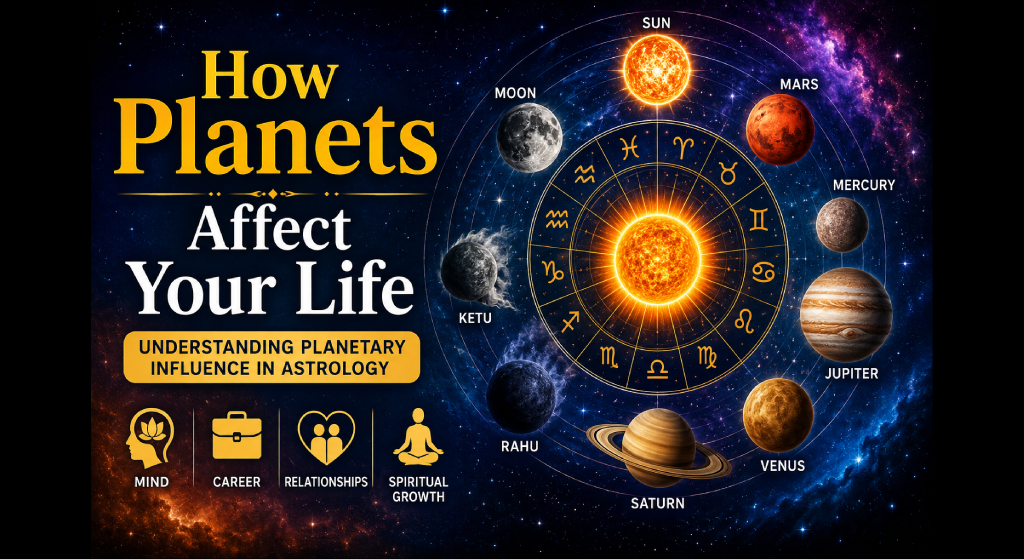
Astrology has fascinated humanity for thousands of years, offering insights into personality, destiny, and life events. Two of the most popular systems practiced today are Vedic Astrology and Western Astrology.
While both aim to interpret celestial influences, their methods, calculations, and philosophies differ significantly. In this detailed guide, we’ll explore the key differences between Vedic and Western astrology to help you understand which system aligns better with your needs
What is Vedic Astrology?
Vedic Astrology, also known as Jyotish Shastra, originated in ancient India over 5,000 years ago. It is deeply rooted in the Vedas and focuses on karma, destiny, and spiritual growth.
Key Features:
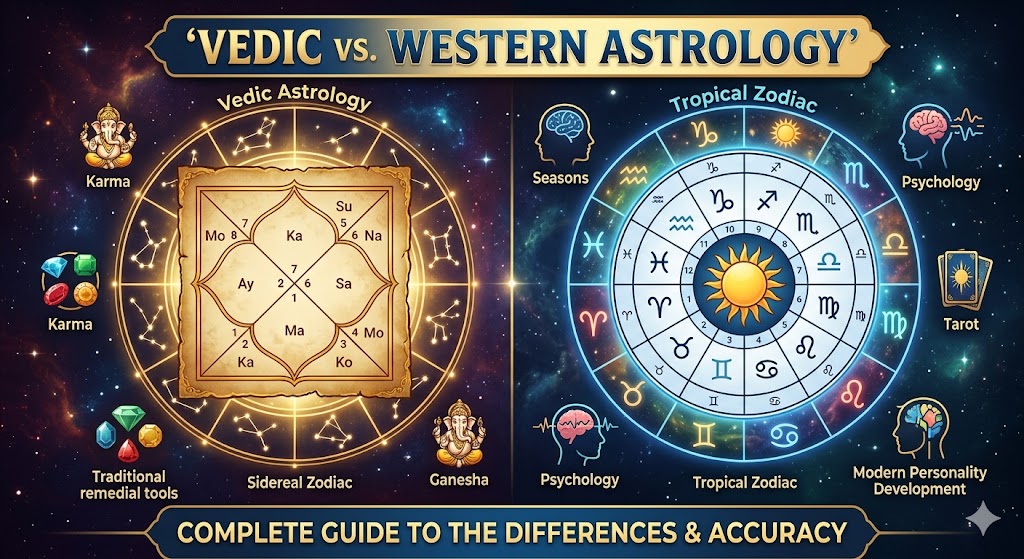
- Uses the Sidereal Zodiac (based on actual star positions)
- Strong emphasis on karma and past life influences
- Divides charts into 12 houses and 27 Nakshatras (constellations)
- Provides predictive tools like:
- Dasha system (planetary periods)
- Transits (Gochar)
- Yogas (planetary combinations)
What is Western Astrology?
Western Astrology originated in ancient Greece and evolved through Roman and European traditions. It is widely used in the modern world, especially in the US and Europe.
Key Features:
- Uses the Tropical Zodiac (based on seasons)
- Focuses more on psychology and personality traits
- Commonly used for:
- Sun sign horoscopes
- Compatibility analysis
- Personal development
Major Differences Between Vedic & Western Astrology
1. Zodiac System Used
- Vedic Astrology: Sidereal Zodiac (fixed star positions)
- Western Astrology: Tropical Zodiac (season-based)
👉 This creates a difference of about 23–24 degrees, meaning your zodiac sign may change between the two systems.
2. Calculation of Birth Chart
- Vedic Astrology: Highly precise, uses exact planetary positions and nakshatras
- Western Astrology: Simpler calculations, focuses on sun sign and planetary placements
3. Focus and Purpose
- Vedic Astrology:
- Predictive
- Karma & life events
- Spiritual evolution
- Western Astrology:
- Personality analysis
- Emotional behavior
- Self-awareness
4. Planetary Systems
Vedic astrology includes shadow planets:
- Rahu (North Node)
- Ketu (South Node)
Western astrology uses:
- Uranus
- Neptune
- Pluto
👉 Vedic astrology does not traditionally use outer planets, while Western astrology relies heavily on them.
5. Prediction Techniques
- Vedic Astrology:
- Dasha system (timing of events)
- Transit analysis
- Detailed life predictions
- Western Astrology:
- Transits
- Progressions
- Psychological interpretation
👉 Vedic astrology is often considered more accurate for timing events.
6. Nakshatra System (Unique to Vedic)
Vedic astrology divides the zodiac into 27 Nakshatras, offering deeper insights into:
- Personality traits
- Compatibility
- Life purpose
Western astrology does not use Nakshatras.
7. Ascendant Importance
- Vedic Astrology: Ascendant (Lagna) is the most important
- Western Astrology: The Sun sign is often emphasized
👉 This is why newspaper horoscopes are based on sun signs (Western system).
Which Astrology System is More Accurate?
This is a common question—but the answer depends on your goals:
- Choose Vedic Astrology if you want:
- Life predictions
- Career, marriage, and finance insights
- Spiritual guidance
- Choose Western Astrology if you want:
- Personality understanding
- Emotional and psychological insights
- Self-growth tools
👉 Many modern astrologers combine both systems for better results.
Key Differences at a Glance
| Feature | Vedic Astrology | Western Astrology |
|---|---|---|
| Zodiac | Sidereal | Tropical |
| Focus | Karma & Prediction | Personality |
| Origin | India | Greece/Europe |
| Special Tools | Dasha, Nakshatras | Progressions |
| Accuracy | Event-based | Psychological |
Conclusion
Both Vedic and Western astrology offer valuable insights—but they serve different purposes.
- Vedic Astrology is ideal for predictive and life-event analysis
- Western Astrology excels in understanding personality and behavior